
When the model breaks
What Hungary's Election Means for Democracy

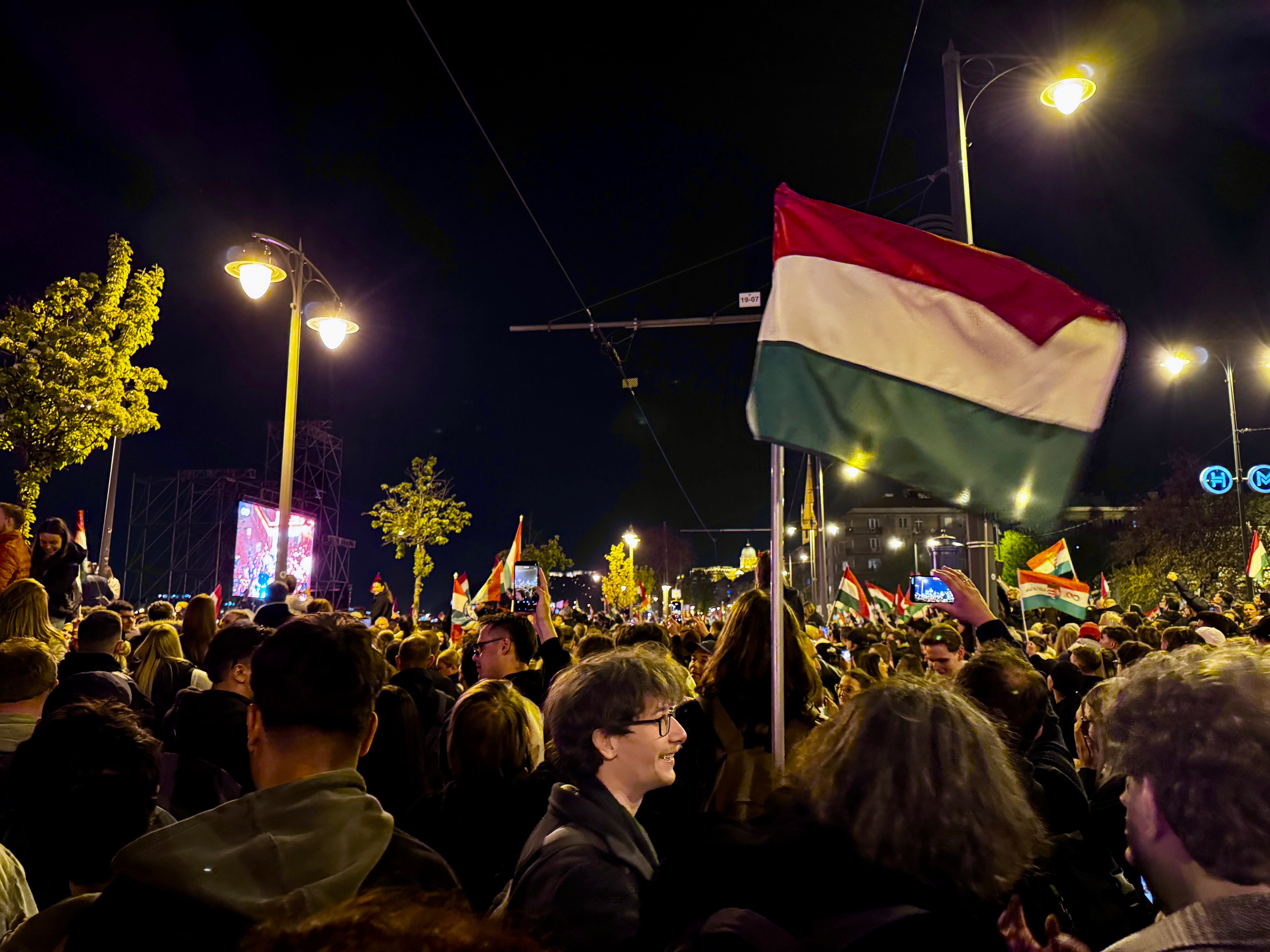
It turns out you can only lie, cheat, steal, and impoverish your country in the name of Christianity and family values for so long before people get disgusted and throw you out of office. In Hungary, it took sixteen years.
On April 12, Péter Magyar’s two-year-old Tisza party crushed Viktor Orbán in a landslide that was not a total surprise to those who follow Hungarian politics closely — but the margin was bigger than many expected, and the speed with which Orbán conceded was striking. Russian agents had been active in the run-up to the election, and many feared that the ruling Fidesz party would find ways to undermine the results. Instead, record-breaking turnout of nearly 80 percent — the highest since Hungary’s transition to democracy in 1989 — made the result uncontestable.
How It Happened
The victory was the product of a relay race of resistance spanning sixteen years. Grassroots organizations, civic coalitions that led large-scale protests, and opposition parties each carried the baton at different moments. They kept hope alive, tested strategies, and kept EU attention on Hungary as Fidesz systematically took control of the courts, media, economy, universities, and churches. In 2022, there were high hopes that a unified civic and political opposition could break through Orbán’s communications machine and his grip on the countryside. But that push within the confines of existing civic movements and opposition political parties fell short.
What changed in 2024 was the emergence of a new political party and a new kind of candidate. When social media influencers organized large protest events in the wake of a pedophilia-cover-up scandal at the highest ranks of Orbán’s supposedly pro-family government, Péter Magyar, not any of the established opposition politicians, successfully stepped forward to channel public anger into politics.
The Tisza Party is not easily characterized as left or right. Its 243-page platform is pragmatic and comprehensive. Its commitments to universal health care, social housing, and a wealth tax arguably put its economic policies to the left of the U.S. Democratic Party, while its hardline immigration policy, which is a troubling trend among many center-left and center-right parties in Europe, and relative silence on LGBTQ rights put it to the right. Still, overall, claims that Magyar is a right-wing politician because he came out of the Fidesz world miss the mark.
Magyar himself is a talented political communicator. He spent 2024-2026 traveling across Hungary, often walking alongside dozens of supporters carrying Hungarian flags — visiting more than 700 small towns and rural settlements, often multiple times, patiently answering questions for hours after giving a speech, and sitting with people to listen. Tisza, staffed by many people with theatre and art backgrounds, live-streamed everything — the speeches and the hours of questions and answers, cut beautiful videos and posted them constantly, breaking through the propaganda bubble with authentic presence and digital savvy.
One U.S. parallel might oddly be Bobby Kennedy’s 1968 campaign — someone from a privileged background who went out and talked to people, and seemed transformed by the experience. Or think Barack Obama, a new charismatic, not-exactly populist, leader who could hold a lot of different expectations. And like the 2008 Obama campaign, Tisza built a massive volunteer-led campaign – more than 2,000 Tisza Islands (The Tisza, the name of the party, is Hungary’s second-largest river) functioned as the equivalent of Obama’s neighborhood teams, bringing tens of thousands of new people into meaningful political action (Tisza claims that more than 50,000 volunteers worked on the campaign, in a country of 10 million people).
The politics Magyar practiced are less about left versus right and more about an authentic connection with working and middle-class people who feel locked out. That can have many ideological expressions, as Zohran Mamdani showed New Yorkers and the world. What mattered with Magyar (whose name literally translates to "Peter Hungarian") was that people believed he actually listened to them and was prepared to lead the country in a fundamentally different direction.
What It Means for Hungary
Three days after the election, Magyar met with Hungary’s President Tamás Sulyok, who holds a mostly ceremonial role that includes asking Tisza to form a new government. Magyar told Sulyok he was a disgrace and should resign. He then went on national state television — the same captured media apparatus Fidesz had used for years as a propaganda tool — and described the station as a “factory of lies,” saying that one of his first steps would be to suspend its service until it was restructured. As he left, the staff applauded. Those images capture the speed and clarity with which Magyar is moving to restore democracy to Hungary. Swift action to restore the rule of law should also unlock billions of euros in frozen EU funding.
Having spent a lot of time living in Hungary over the last eight years, I’ve come to appreciate the skepticism that runs through Hungarian culture, especially compared to what can feel like unrestrained American optimism. When it comes to Magyar and Tisza, there are many ways to disappoint. Still, Magyar comes across as an earnest and honest patriot, and it is at least possible that he’ll use his mandate and supermajority to hack away at the Tisza platform while holding on to Hungarians' trust and loyalty.
Personally, I’ll be watching three things closely, because they are central to the organizing that Faith in Action International has been supporting in Hungary, through Mandák House, a Lutheran Church in Budapest, which has been a center for tenant organizing, Roma solidarity, and welcoming migrants and refugees.
First, ending state capture of religion. Orbán’s regime cynically controlled faith institutions through a mix of financial incentives and punishment — running social service funding through favored churches, decertifying religions seen as disloyal. The Tisza platform criticizes state capture and promises transparent, equitable policies for religious institutions. But restoring the autonomy of faith communities to organize against injustice and participate in public life without fear will require sustained pressure, not just a change in government.
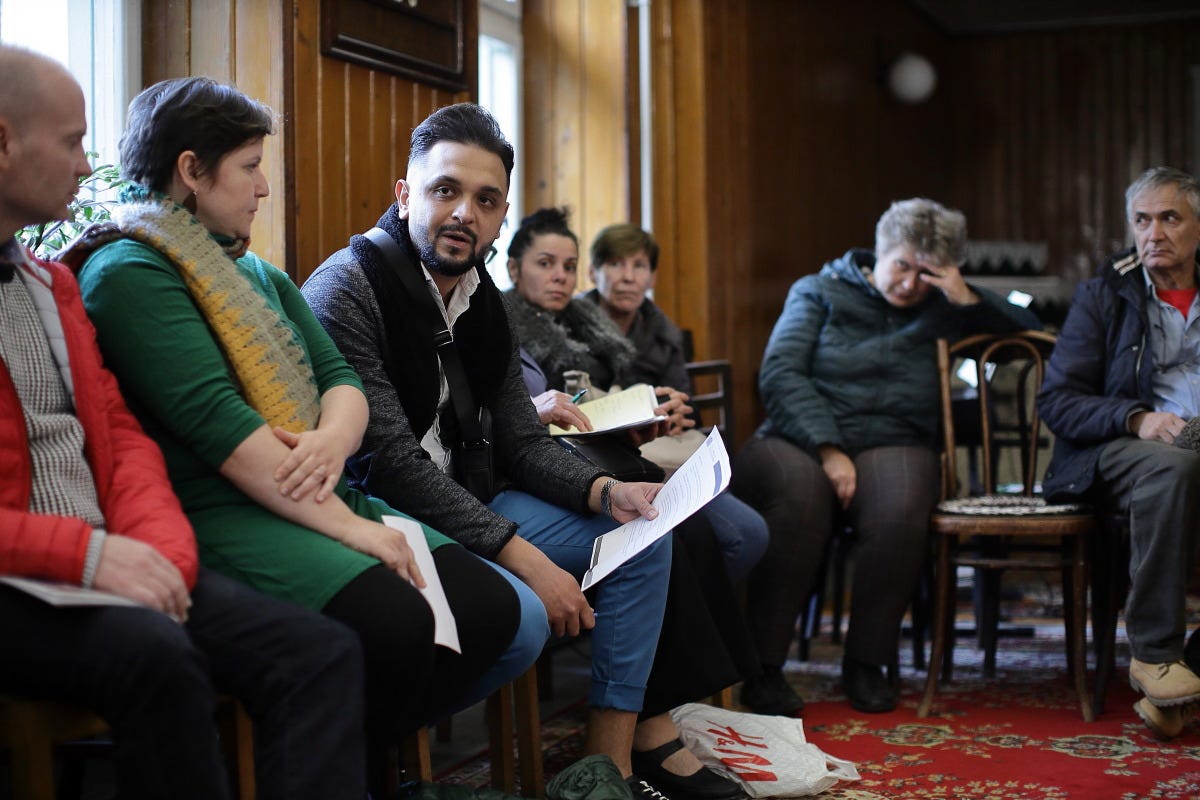
Second, affordable and public housing. Faith in Action International has supported tenant organizing in Budapest’s public housing for the past four years. The question now is whether the new government will prioritize improving the woeful condition of public housing and building new units to meet the high demand for affordable housing. Last week, I wrote a post about 15 Lujza Street in Budapest —one of the two dozen organized buildings that anchor the Józsefváros Tenant Community. Through tenant-by-tenant, building-by-building organizing, tenants have been able to work with a progressive opposition Mayor to secure material improvements in their buildings and fight back against the Orbán regime’s plan to demolish their buildings without providing replacement housing. Their organizing and agenda to improve public housing have been grounded in one community, but it is a glimpse of what’s possible and a litmus test for the new government.
Third, ending Roma segregated education. This is a profound shame in Hungarian society, and Tisza speaks clearly against it. A 2024 report by the Rosa Parks Foundation found that Roma children are routinely misdiagnosed with intellectual disabilities and funneled into segregated special education — a practice that the European Court of Human Rights condemned over a decade ago. But there are powerful institutions — including churches that run segregated schools — with a stake in keeping that system intact. Outside movements will need to hold Tisza accountable to keep its promises, one of the most important roles that civil society can play in this moment.
What It Means for Europe and the World
Orbán’s defeat strengthens the hand of pro-democratic parties and movements across Europe and deals a serious blow to the political alliance that Orbán, Putin, Trump, and the American right spent years building. That alliance is fracturing — you can see it in the tensions between Italian Prime Minister Giorgia Meloni and Trump, exacerbated by Trump’s attacks on Pope Leo – and the growing recognition that Trump is an electoral liability for right-wing politicians globally, not just in the U.S. At the same time, we are seeing the extreme, neo-Nazi right surge.
The EU has played an ambivalent role in this story. For years, Brussels declared Hungary in violation of fundamental European democratic norms but didn’t enforce the consequences. The underbelly of the EU’s democratic rhetoric was that Fidesz used EU money as a primary source of funding to reward loyalists and punish dissenters, with Germany and other countries that have benefited from cheap Hungarian labor turning a blind eye. It was only in the last several years — especially post-COVID — that the EU began seriously withholding funding. Magyar made corruption tied to the woeful state of the economy a key focus of his campaign and argued that he would bring EU money back to serve the Hungarian people.
The Hungarian experience is a reminder that external pressure and sanctions matter. The EU’s slowness allowed Orbán’s system to consolidate far longer than necessary. When pressure finally came, it reinforced the domestic movement that brought down the regime. This is why building cross-border solidarity networks is critical for the global struggle for democracy and human rights — and an important part of Faith in Action International’s theory of change.
What It Means for US Politics
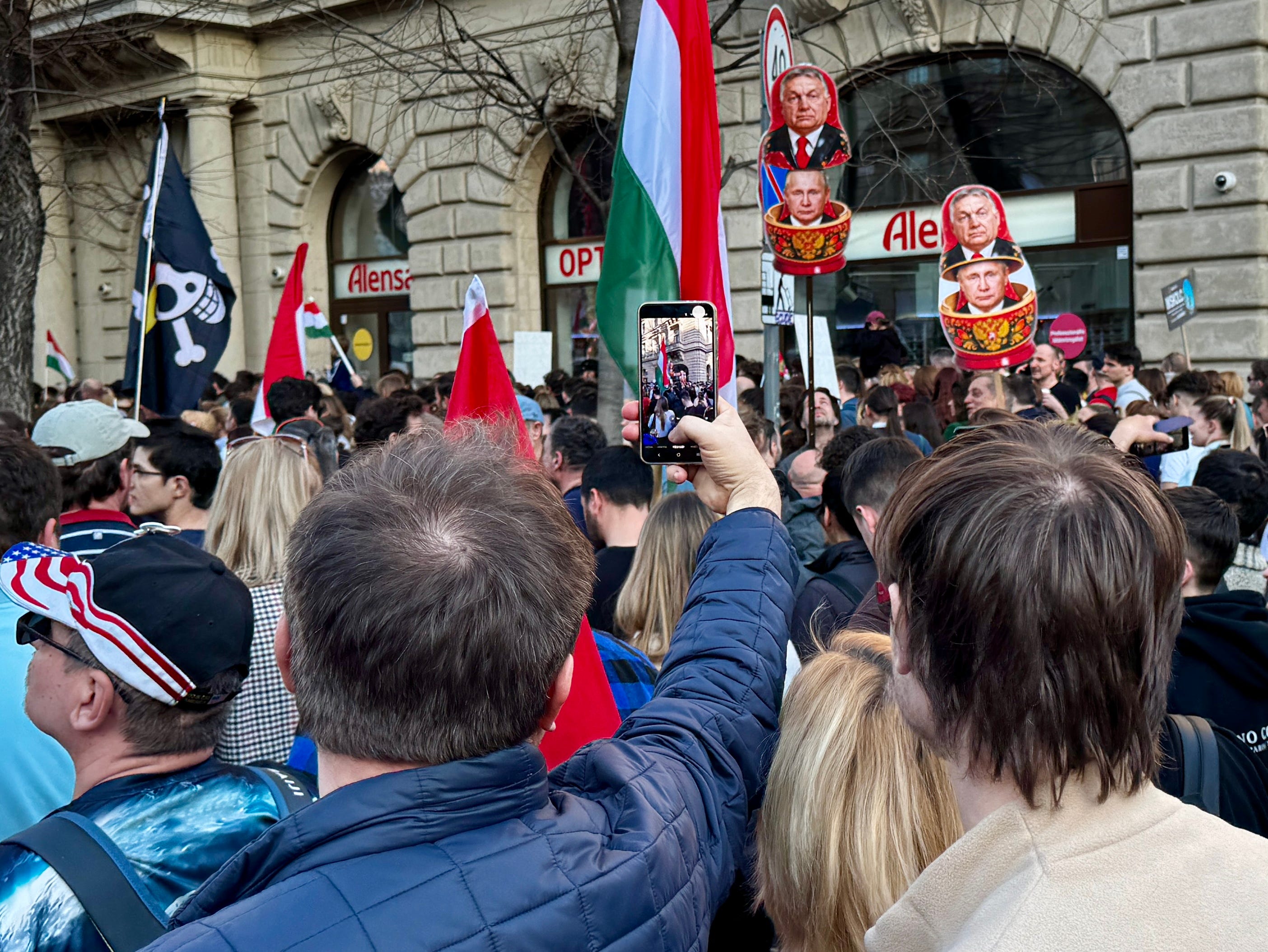
The American right invested enormous sums of money, energy, and political capital in promoting Hungary as a model. CPAC held satellite events in Budapest. Orbán spoke at conservative gatherings in the US. He credited himself with helping write Trump’s political program. And then JD Vance flew to Budapest days before the election to rally with his ally — and in a moment that heaped a new wave of scorn on him, told the crowd that Viktor was going to win, while Orbán, standing right beside him, tilted his hand back and forth, gesturing “probably not.”
That trip captured something important about what happens when you hitch your wagon to an autocrat and build your politics inside an information bubble. The American right was so invested in the story of Hungary as a success that it both betrayed core moral and democratic values and couldn’t read the actual situation on the ground. That’s a cautionary tale about the dangers of ideology outrunning reality and morality.
But the U.S. media hasn’t done much better. The tendency to turn Orbán into a cardboard villain — the embodiment of everything evil — rather than actually understanding how his regime operated, including the movement it built, and why it held power for so long, produced its own distortions. And the lazy assumption that because Magyar came out of Fidesz, he must be a right-wing politician led to a serious misreading of what Tisza actually represents.
The lesson isn’t that Hungary vindicates a simple third-way centrism. Move to the center, trim your sails, and you’ll beat the authoritarians. That’s too simple. What Magyar actually built was a broad cross-constituency, cross-ideological coalition organized around things people concretely need — decent health care, affordable housing, higher teacher salaries, renewable energy — combined with a genuine outsider identity and two years of actually listening to people. That’s a more complex and more useful model than either populism or triangulation.
Lessons for US Organizers
Three things stand out for those of us doing this work in the United States.
First, protest and resistance are necessary but not sufficient. Sixteen years of creative, large-scale resistance in Hungary kept the democratic flame alive and laid the groundwork for massive turnout and regime change on April 12. When Magyar campaigned to improve schools and other public services, he was building on a mass movement of students, parents, and teachers who made low teacher salaries a salient issue over the past four years. We should not minimize the role of organizing and protest. But resistance alone couldn’t break Fidesz’s grip.
What finally worked was a new political movement, led by people who spoke in a different register – one that embraced Hungarian patriotism and rural culture. Tisza was a movement party that succeeded in reaching new people, including many young people. Magyar’s victory is inseparable from the Tisza Islands, the two-year walking campaign, and the time invested in building trust in small towns that felt written off. We face a similar challenge in the U.S. We need broader coalitions, geographically targeted toward where governing power is actually won, with a particular eye toward 2028. If we are going to crush the malignancy of MAGA, we have to bring in people who aren’t yet with us — not just mobilize those who already are.
Second, our movement needs to own its relationship to political renovation – not just turning out voters, but playing a meaningful role in transforming the Democratic Party into a genuine vehicle for change. We’re seeing examples of this at the city and state levels: in a growing number of progressive cities, and in states like Minnesota, where more than a decade of patient organizing produced transformative social and racial justice victories and began to remake the Democratic Farmer-Labor Party. But nationally, our movement’s inability to say anything meaningful when Biden unilaterally chose to run for reelection — when we knew the result could be catastrophic — and then to go along with the transition to Harris without a real reckoning, reflects a deeper problem. We haven’t built the capacity to challenge party orthodoxy when it matters. The Hungarian resistance movement faced a similar problem, with fragmented opposition parties unable to win the trust of a broad cross-section of voters until Tisza emerged. We need to be honest about our role in the failures that opened the door to Trump’s second term, and do better next time.
Third, we need a clear and unapologetic commitment to social democracy – not watered-down, poll-tested messaging, but genuine clarity about what it means to live a dignified life and what a government committed to that would actually do. Hungary’s path to authoritarianism was paved by neoliberalism. The transition to democracy in 1989 came with privatization of housing, job losses, and the dismantling of social protections. The left-liberal parties that administered this “shock therapy” never recovered their credibility. When the financial crisis hit Hungary hard, Orbán won a two-thirds majority on the promise to use state power differently. Although Orbán’s first years saw wage increases and low unemployment, what he ultimately delivered was a low-wage economy that relied on foreign assembly plants, and chronic disinvestment in health, education, affordable housing, and social services. Domestic companies aligned with the regime amassed capital, but poor and working people did not receive what they were promised, and that dynamic led to Tisza’s victory.
The U.S. version of this story is playing out now. The talk about affordability that dominates our politics today reflects the accumulated failure of neoliberal policies to deliver for working people. But naming the problem is not enough. Democracy loses its meaning when it isn’t tied to what people need to live decent lives — especially the big three of health care, education, and housing. Social democracy is the best antidote to authoritarianism. We may not always use those words, but we should internalize that this is what we are building toward: the social rights that make democracy meaningful in people’s lives. When people don’t experience that connection, they become vulnerable to demagogues with anti-democratic answers. That is the lesson of Hungary’s sixteen years under Orbán, and one we need to take seriously in the U.S.
Conclusion
When Mandák House began supporting tenant organizing in Budapest in 2023, they were building on years of informal work with Roma communities living in neglected public housing buildings. They were also able to make the most of a political opening—the 2022 election of a left opposition mayor in their district. The mayor was a sympathetic target. He hired talented staff and saw poor and working-class residents as his base. But he needed to be pushed to make hard decisions and prioritize public housing. Organized tenants successfully pressed for new leadership of the company responsible for managing public housing. Tenants at 15 Lujza Street and other buildings won new roofs, electrical systems, security doors, and other improvements that made their buildings more livable. Many vacant units still need to be repaired. Tisza’s victory and the expected release of EU funds create hope that the district can make bigger improvements and adopt a more visionary approach. But nothing important happens without work – and there is a reason we say that organizing makes the impossible possible, and the possible inevitable.
In some ways, 15 Lujza Street and the Józsefváros tenants are a microcosm of the challenges and opportunities facing Hungary, and the U.S. Everything we do as organizers builds on our ancestors’ work, but rarely in a linear fashion. Organizing is a powerful tool for re-democratization, but it has limits. When you know a tool well, you tend to overestimate its value – with a hammer, every problem looks like a nail. Our challenge is to be disciplined about building people-led organizations, while stretching to shape the larger political dynamics that determine what we can achieve. And when windows open—as they have in Hungary and as they are opening in the U.S. and globally—we need to be prepared to move quickly, so that political change results in significant improvements in people’s lives, not just tinkering at the edges of broken systems.
Gordon, thus is a fabulous, grounded, relevant, visionary piece. Thank you so much. I’m circulating it broadly.